
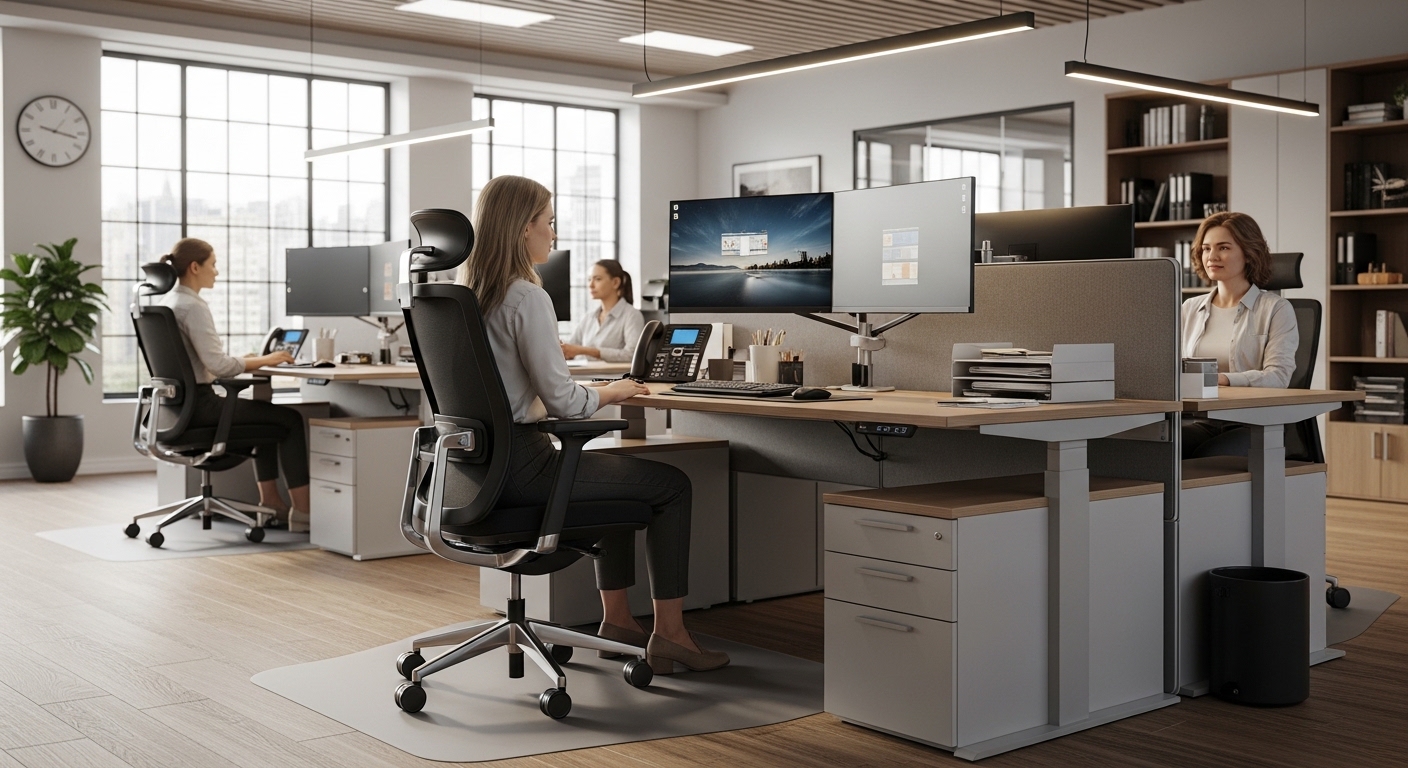
Workplace ergonomics centers on designing environments that promote comfort, efficiency, and long-term well-being. In modern professional settings, where individuals often spend extended hours seated at desks, poorly arranged workstations can contribute to musculoskeletal disorders, chronic fatigue, and decreased productivity. A thoughtfully designed workspace minimizes physical strain while supporting sustained performance.
An ergonomic setup begins with proper seating. Adjustable chairs with adequate lumbar support help maintain the spine’s natural curve, reducing pressure on the lower back. Seat height should allow feet to rest flat on the floor while knees remain at roughly hip level. Armrests positioned at a comfortable height support the shoulders and prevent tension in the upper body. These adjustments collectively reduce strain in the neck, back, and shoulders.
Desk configuration is equally important. The desk height should allow elbows to rest at approximately a 90-degree angle, keeping forearms parallel to the floor. Monitor placement significantly influences posture; screens should sit at eye level and about an arm’s length away to prevent forward head positioning and eye strain. Keyboards and mice must be positioned to maintain neutral wrist alignment, lowering the risk of repetitive strain injuries.
Lighting conditions also shape ergonomic quality. Access to natural light can reduce eye fatigue and improve mood, while balanced ambient lighting and anti-glare screens prevent visual discomfort. Supplemental tools—such as footrests, document holders, and sit-stand desks—introduce flexibility and encourage movement throughout the day.
Ultimately, workplace ergonomics supports both health and performance. Comfortable employees experience fewer physical complaints, sustain concentration longer, and maintain higher productivity levels. Investing in ergonomic design is a proactive approach that benefits individuals and strengthens organizational effectiveness over time.