
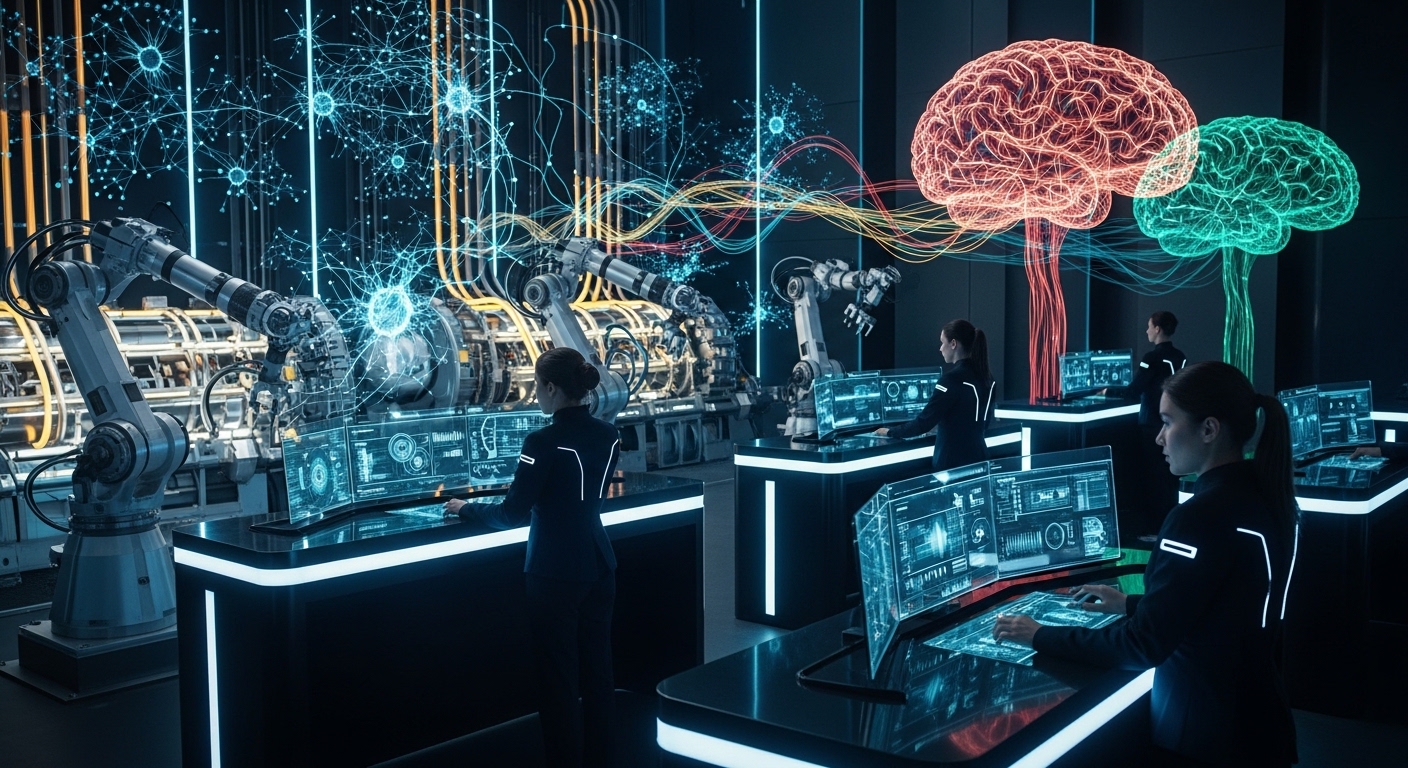
Technological evolution has moved far beyond mere automation, entering an era of intelligent, adaptive systems. Whereas early advancements emphasized mechanizing repetitive tasks to boost efficiency, modern technology focuses on creating systems that can learn, predict, and optimize autonomously.
Artificial intelligence (AI) and machine learning (ML) form the foundation of this transformation. Unlike traditional software that executes fixed instructions, intelligent systems analyze complex patterns, process massive datasets, and continuously refine their behavior. This capacity for self-improvement enhances accuracy, performance, and decision-making across a wide range of applications.
Industries worldwide are embedding intelligent systems at their operational core. In manufacturing, predictive maintenance minimizes downtime and prolongs equipment life. In healthcare, AI supports diagnostics, treatment planning, and patient monitoring. In finance, advanced analytics detect anomalies, optimize investments, and improve risk assessment. These examples illustrate how intelligence amplifies human capability rather than replacing expertise.
The collaboration between humans and intelligent systems redefines productivity. Professionals leverage AI-driven insights, simulations, and real-time analytics to make strategic decisions, combining machine precision with human creativity and judgment. This synergy fosters innovation while maintaining oversight and adaptability.
The shift from automation to intelligence represents a fundamental philosophical change in technology. It is no longer about merely executing tasks faster—it is about creating systems capable of learning, adapting, and evolving continuously. As intelligent capabilities become embedded across digital infrastructure, the future will be defined by responsive, self-optimizing ecosystems that enhance performance, innovation, and strategic insight.