
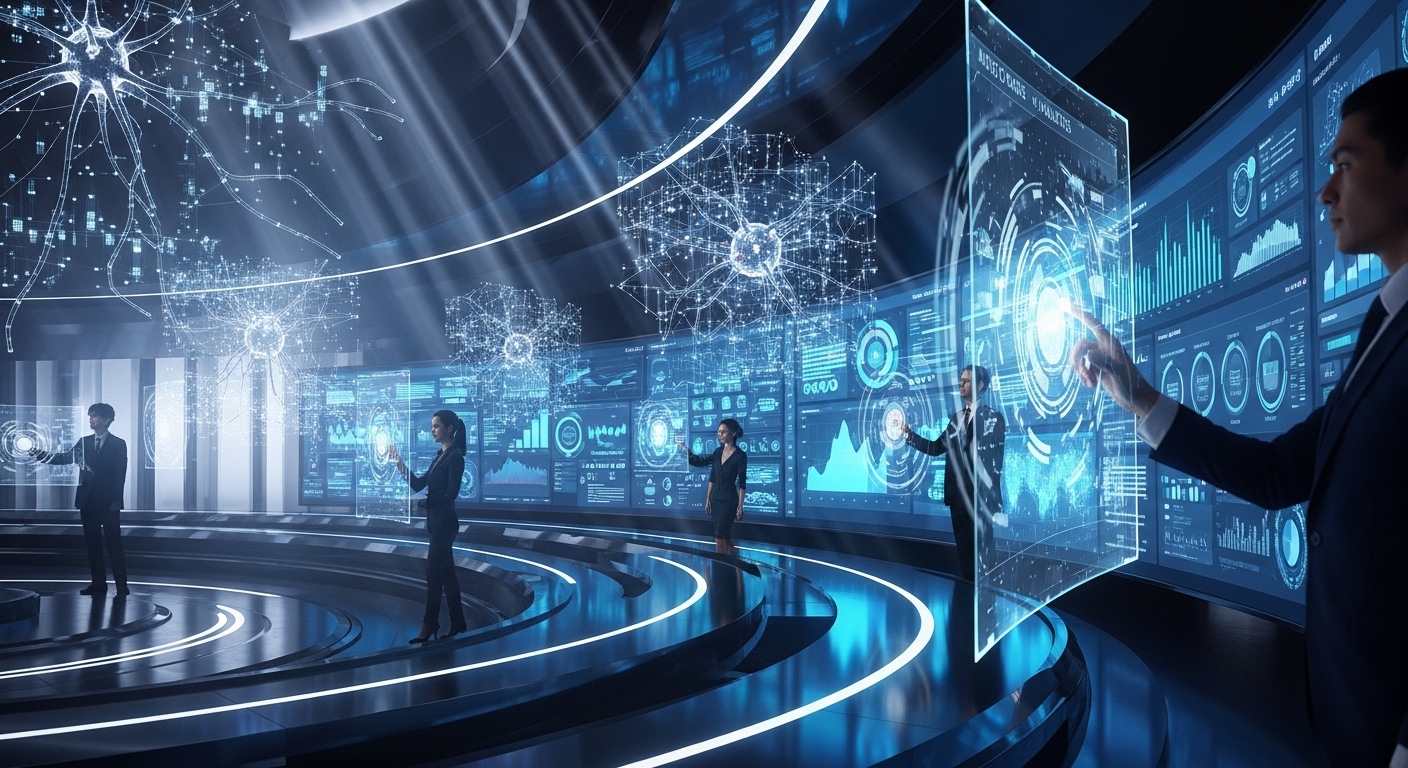
The evolution of technology has ushered in an era dominated by intelligent systems. Unlike traditional tools that operate within fixed parameters, these technologies are capable of learning, adapting, and optimizing performance over time. This shift marks a fundamental change in how organizations leverage technology, moving from static execution toward dynamic, self-improving systems. Artificial intelligence (AI) and machine learning (ML) form the foundation of this transformation, enabling machines to recognize patterns, predict outcomes, and support decision-making with unprecedented speed and accuracy.
Industries across healthcare, finance, logistics, and manufacturing are embedding intelligence into their operations. In healthcare, AI-driven diagnostics enhance accuracy and enable personalized treatment planning. Financial institutions employ automated trading and risk management systems that improve efficiency and reduce human error. Supply chains leverage predictive analytics to optimize inventory, forecast demand, and streamline distribution networks. These intelligent systems augment human capability, allowing organizations to act faster, make better-informed decisions, and scale operations effectively.
Human-machine collaboration defines the modern technological landscape. Intelligent dashboards provide real-time recommendations, simulation models allow testing of strategic scenarios, and automation handles repetitive or time-consuming tasks. This synergy enables professionals to focus on higher-value activities such as creativity, strategic planning, and innovation. By combining human judgment with machine intelligence, organizations achieve both agility and precision.
The rise of intelligent systems reflects a broader shift in technological philosophy. Success is no longer measured solely by speed or efficiency but by adaptability, continuous improvement, and the ability to respond to changing environments. As AI and machine learning become embedded across digital infrastructure, the future of technology will revolve around responsive, self-optimizing ecosystems that drive sustainable growth. Organizations that embrace this transformation can harness intelligence to improve operations, enhance innovation, and maintain a competitive advantage in an increasingly digital and dynamic world.