
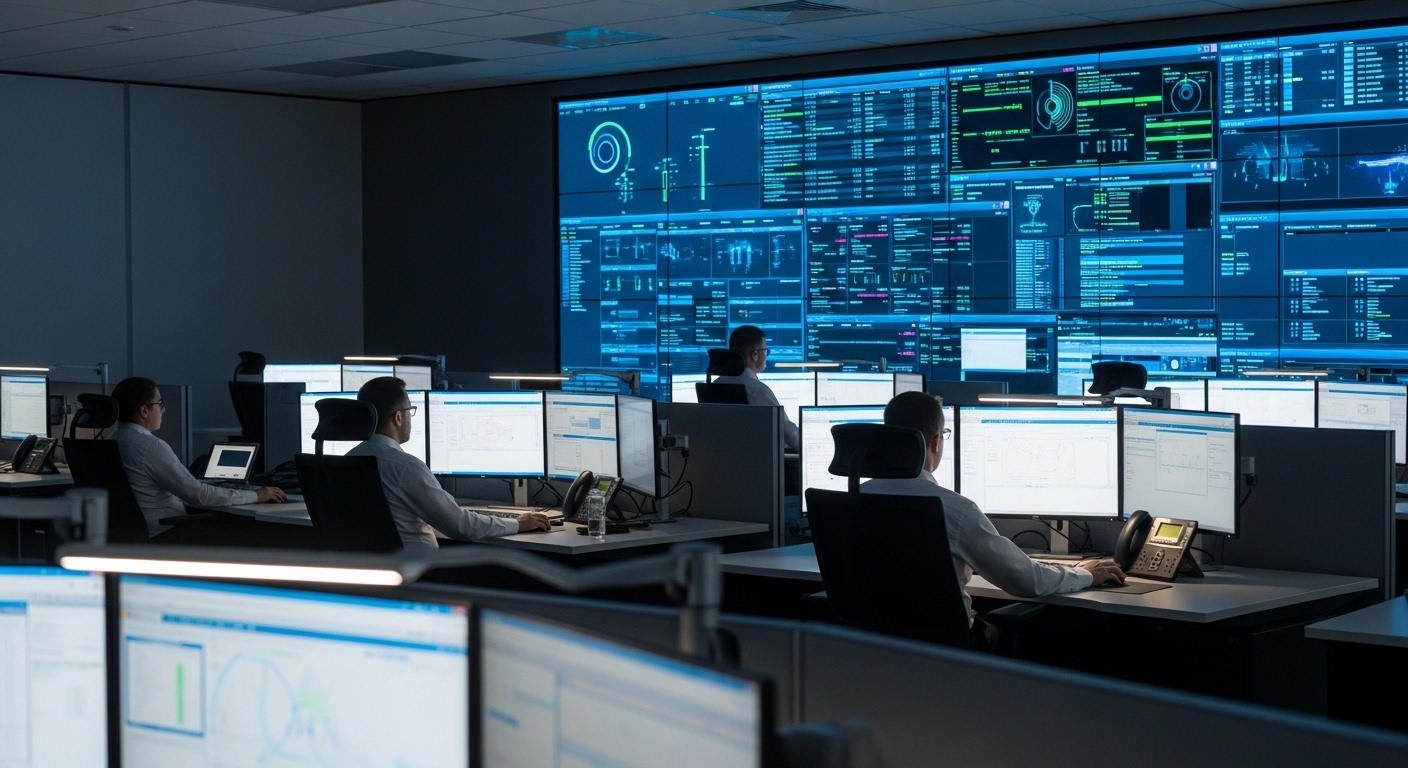
Control rooms are the central nervous system of modern operations, where critical decisions are made under pressure and in real time. Their effectiveness depends on how well information is structured, visualized, and delivered to operators who must act quickly and accurately.
Precision begins with clarity. Interfaces must present only what is necessary, eliminating noise and highlighting key data points. When operators are overwhelmed with excessive information, performance declines and response time increases. Well-designed control environments prioritize relevance over volume.
Spatial organization also plays a significant role. Screen placement, lighting, and ergonomic layouts ensure that operators can maintain focus during long shifts. Every element within the control room is designed to support sustained attention and minimize fatigue.
Integration is another essential factor. Control rooms bring together data from multiple systems, including monitoring tools, communication platforms, and analytics engines. When these systems operate in isolation, operators are forced to piece together information manually. Integrated environments provide a unified operational picture, enabling faster and more accurate decision-making.
Automation enhances precision by handling repetitive monitoring tasks. Intelligent systems detect anomalies, trigger alerts, and provide contextual insights. This allows operators to focus on critical situations rather than routine processes.
Ultimately, operational control precision is achieved through the alignment of technology, design, and human capability. A well-structured control room does not simply display information; it enables action. By reducing complexity and improving clarity, organizations can ensure that their control rooms operate with efficiency, accuracy, and confidence in even the most demanding conditions.