
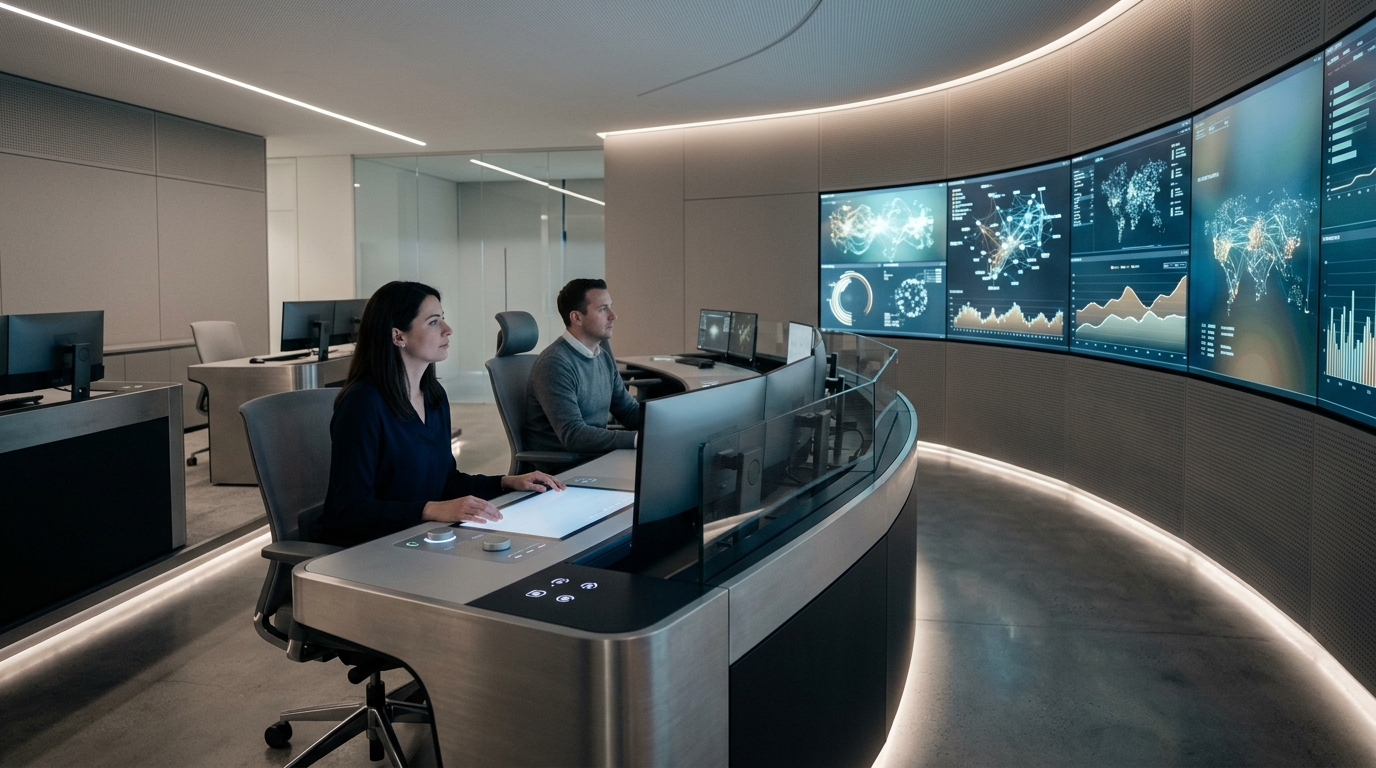
Control rooms have become the operational backbone of modern industries, providing centralized environments where critical decisions are made with precision and speed. As organizations grow more dependent on real‑time data, advanced monitoring, and integrated systems, the role of the control room has evolved into a strategic hub that ensures safety, efficiency, and uninterrupted performance. Today’s control rooms combine intelligent software, ergonomic design, and high‑performance hardware to deliver seamless operational oversight across complex environments.
One of the defining strengths of a modern control room is its ability to consolidate information from multiple sources into a unified interface. Operators can monitor equipment, track performance indicators, and respond to alerts instantly. This level of visibility reduces downtime, enhances productivity, and ensures that potential issues are addressed before they escalate. Industries such as energy, transportation, manufacturing, and security rely heavily on these capabilities to maintain operational stability.
Ergonomics also plays a crucial role in control room excellence. A well‑designed workspace improves operator focus, reduces fatigue, and enhances decision‑making accuracy. Adjustable consoles, optimized lighting, and intuitive layouts create an environment where operators can perform at their best. When combined with advanced visualization tools, such as large‑format displays and multi‑screen dashboards, the control room becomes a highly efficient command center.
Technology integration is another key factor. Modern control rooms utilize AI‑powered analytics, automation tools, and predictive monitoring to support proactive operations. These technologies help organizations anticipate risks, optimize workflows, and improve long‑term performance. With cloud connectivity and secure communication channels, control rooms can now manage distributed assets across multiple locations with ease.
Looking ahead, control rooms will continue to evolve as industries adopt smarter systems and more advanced digital infrastructure. The future will bring greater automation, deeper data insights, and enhanced collaboration capabilities. As organizations strive for operational excellence, the control room will remain a critical component in achieving reliability, safety, and strategic growth.