Blog

Design as a Cognitive Responsibility

For many years, design in control rooms was treated as a surface-level concern. Clean layouts, modern colors, and visually impressive screens were considered sufficient. As long as the room looked organized, it was assumed to function well. The cognitive experience of the operator was rarely the primary focus. That assumption has changed. Today, design is […]

Designing Calm in a Landscape of Threats

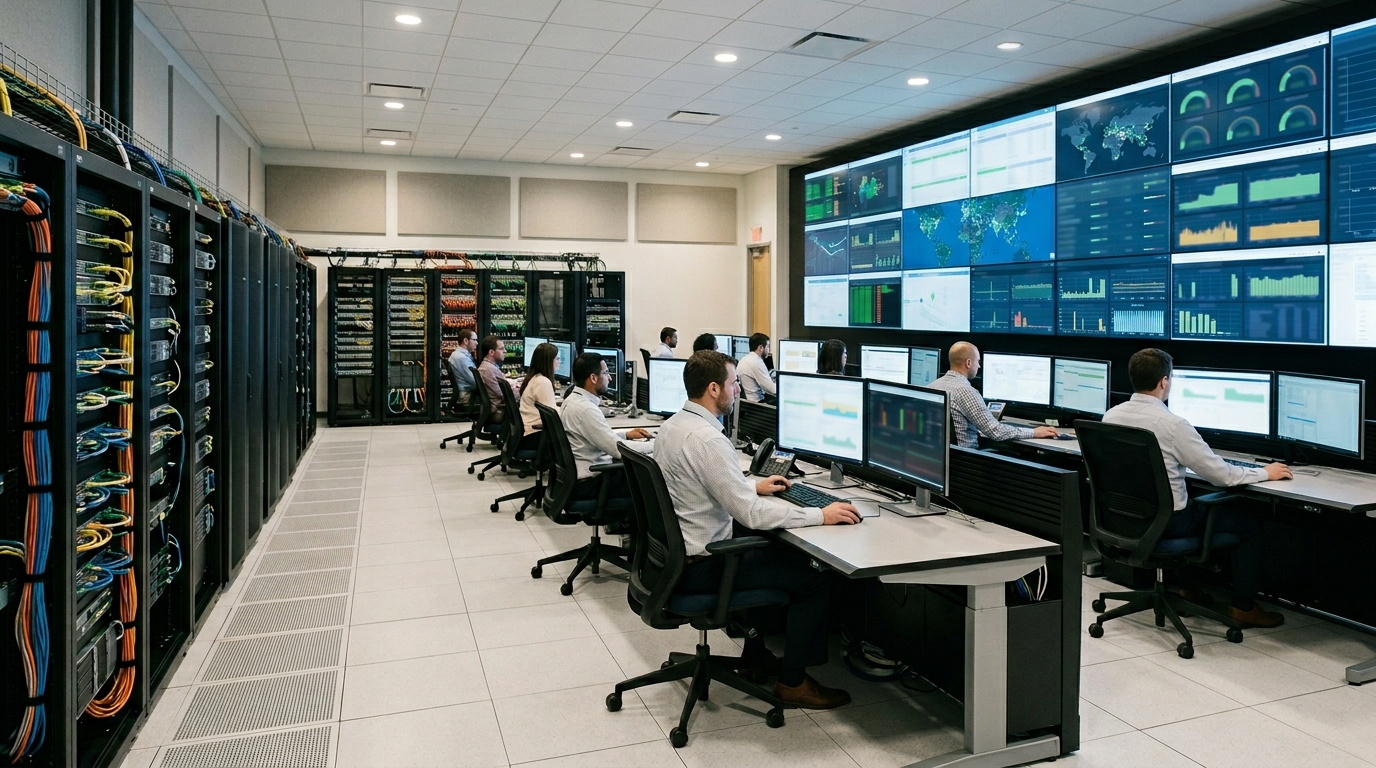
Cyber security operations rooms operate in a state of constant tension. Threats evolve rapidly, attack surfaces expand, and the margin for error remains dangerously small. Every alert carries potential consequence, and every delay can amplify damage. In this environment, pressure is not occasional — it is continuous. Early cyber security environments attempted to manage this […]

The Future of Control Rooms in Smart Cities

There was a time when control rooms were isolated spaces. They managed power grids, monitored traffic, or oversaw security — each in its own silo. The systems were functional, mechanical, and largely disconnected. But over the past decade, something subtle yet transformative shifted — not in the technology alone, but in the expectations of the […]

Control Rooms as Invisible Foundations of Trust

For a long time, control rooms existed at a distance from the communities they served. Hidden behind secure doors and technical interfaces, their work was essential yet largely unseen. The public became aware of them only when something went wrong — when traffic stalled, power failed, or emergency response lagged. Visibility was tied to failure, […]

Applications That Support Thinking Under Pressure

There was a time when control room applications were designed with a single goal in mind: completeness. If every data point could be displayed, the application was considered successful. Usability was secondary. Context was assumed to be something operators would construct on their own. In low-pressure environments, this approach was manageable. But as operational complexity […]

Human-Centered Control Room Design

There was a time when control rooms were designed around machines. Rows of screens, blinking lights, and endless alerts defined the environment. Operators were expected to adapt to the system, not the other way around. The space was functional, mechanical, and largely overwhelming. But over the past decade, something subtle yet transformative shifted — not […]

From Monitoring Spaces to Intelligent Nerve Centers

There was a time when control rooms were understood as functional spaces. Screens displayed feeds, operators monitored activity, and systems logged events. The room was mechanical, transactional, and largely reactive. It existed to watch, to record, and to respond when something went wrong. But over the past decade, something subtle yet transformative shifted — not […]

The Language of the Room

A control room speaks—not in words, but in signals. Its walls convey calm through muted tones. Its lighting communicates focus through precision. Its layout whispers efficiency through intuitive flow. Every element, from the curve of a console to the placement of a power button, forms part of a silent language—one designed not for visitors, but […]

The Invisible Thread of Integrated Execution

Building a control room is rarely about a single component. It is not just about screens, or software, or seating. It is about the invisible thread that weaves these elements into a unified whole—a thread made of planning, coordination, and deep technical fluency. This is the essence of integrated execution: the seamless orchestration of disciplines […]

The Architecture of Trust

In mission-critical operations, trust is not declared—it is built. It is constructed layer by layer, decision by decision, through consistency, transparency, and unwavering attention to detail. And nowhere is this trust more tangible than in the physical and operational architecture of a control room—a space where reliability must be engineered into every component, every workflow, […]