
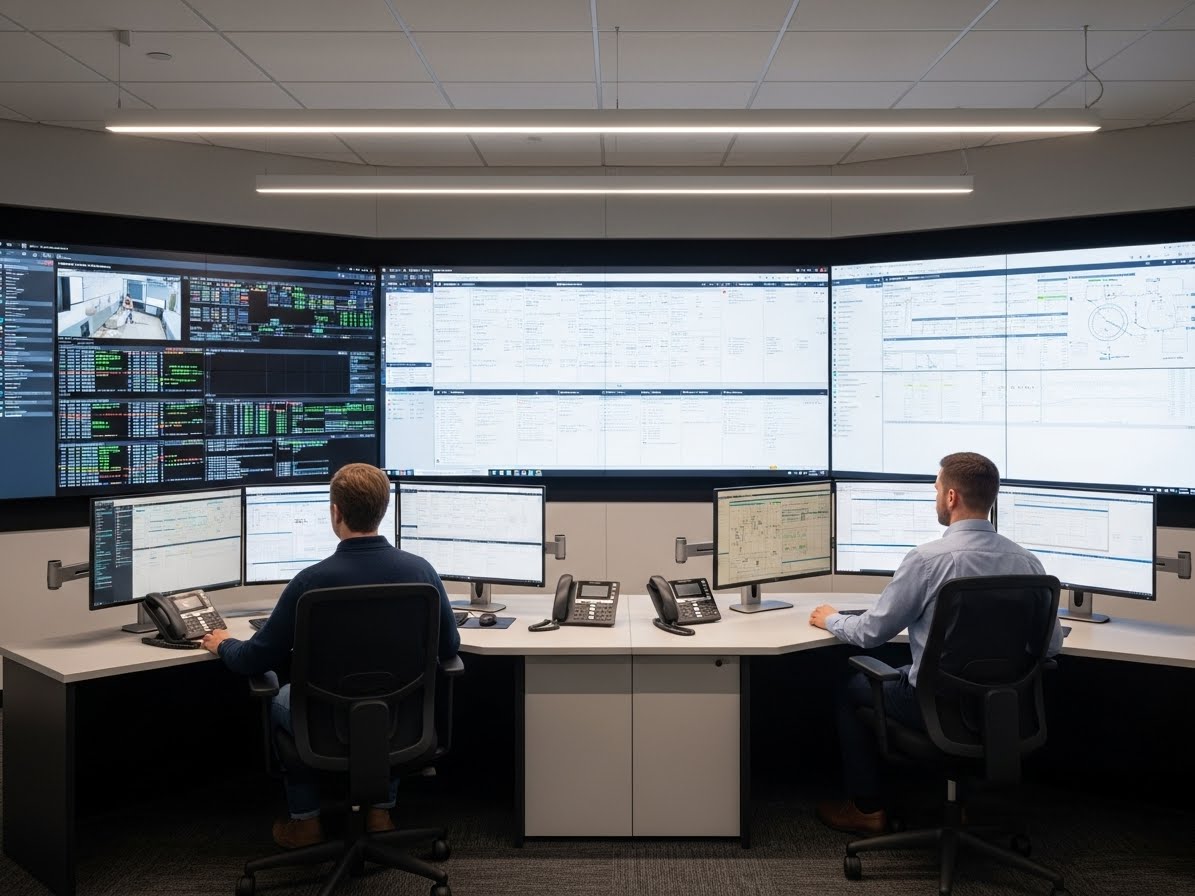
For many years, design in control rooms was treated as a surface-level concern. Clean layouts, modern colors, and visually impressive screens were considered sufficient. As long as the room looked organized, it was assumed to function well. The cognitive experience of the operator was rarely the primary focus.
That assumption has changed.
Today, design is understood as a responsibility — not an aesthetic preference. Every visual decision affects how information is processed under pressure. Layouts influence attention. Colors shape perception. Typography impacts readability. Transitions affect reaction time. In high-stakes environments, these details directly influence performance.
Poor design introduces friction. It increases mental effort, fragments attention, and amplifies stress. Operators may not consciously notice the cause, but the impact accumulates quietly: slower decisions, higher fatigue, greater risk of error.
Thoughtful design does the opposite. It creates confidence by reducing uncertainty. It guides the eye naturally toward what matters most. It organizes complexity into understandable structures without oversimplifying reality. Good design does not demand attention — it manages it.
Great control room design supports mental clarity. It respects human limits by acknowledging that attention, memory, and focus are finite resources. Instead of overwhelming operators with information, it prioritizes meaning. Instead of forcing constant interpretation, it provides visual hierarchy and contextual cues.
In this sense, design becomes an operational asset. It actively contributes to decision quality, response speed, and long-term performance. It is not decoration applied after systems are built, but a foundational layer that shapes how systems are experienced.
When design is treated as a cognitive responsibility, control rooms become environments that support thinking, not just monitoring. And in environments where every decision matters, that support is invaluable.