
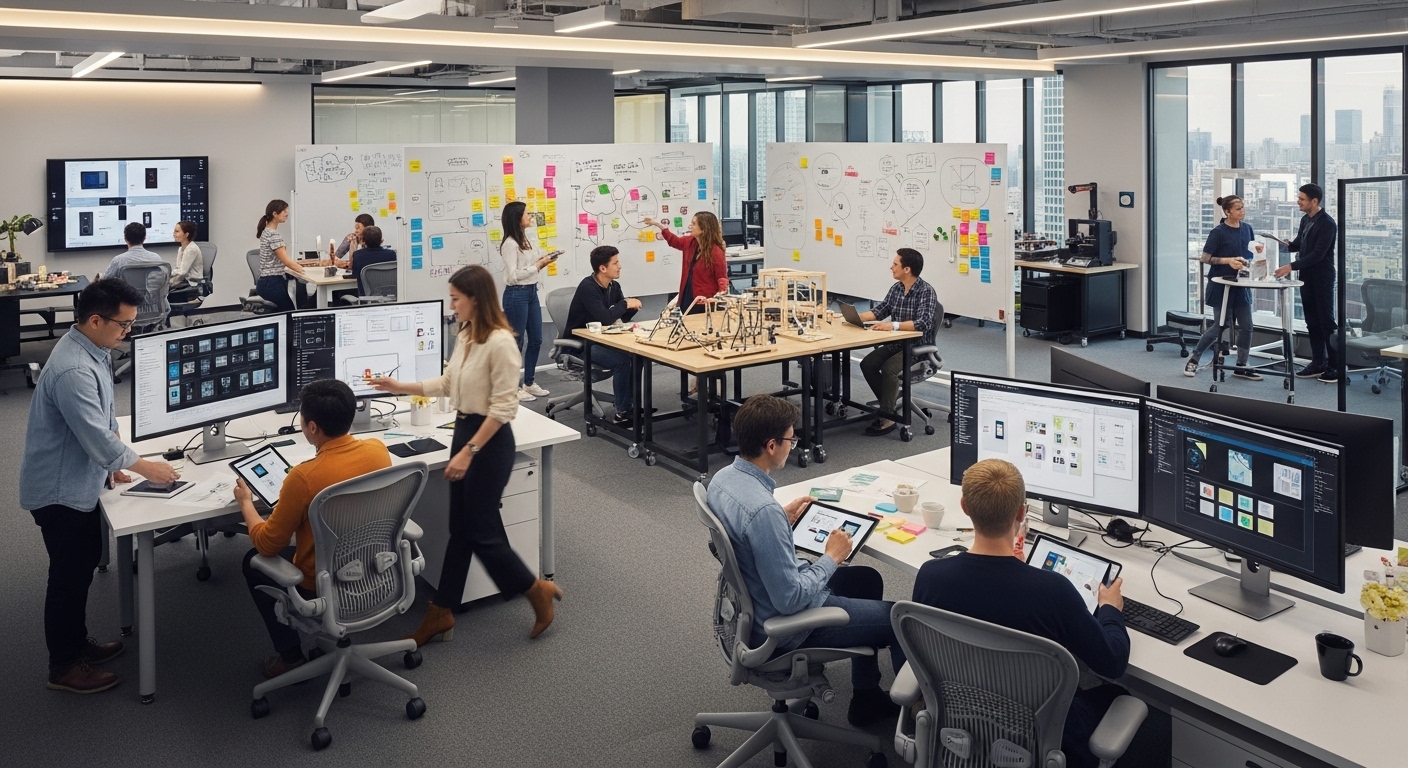
Design thinking is a human-centered methodology that transforms complex challenges into innovative, practical solutions. Rather than beginning with assumptions or technical constraints, it starts with people—their needs, behaviors, motivations, and pain points. By integrating empathy, creativity, and experimentation, design thinking enables teams to build products and experiences that deliver meaningful value.
Empathy forms the foundation of the process. Designers immerse themselves in user environments through interviews, observation, and direct engagement. They seek to understand not only what users say, but what they feel and struggle with. This insight uncovers unmet needs and hidden opportunities, ensuring that problem definitions are grounded in reality rather than speculation.
Once challenges are clearly defined, ideation begins. This phase encourages divergent thinking, where teams generate a wide range of possible solutions without immediate judgment. Brainstorming sessions, collaborative workshops, mind mapping, and sketching stimulate creative exploration. The goal is not to find one answer quickly, but to expand the solution space and consider unconventional approaches.
Prototyping transforms abstract ideas into tangible forms. Low-fidelity wireframes, mockups, or interactive models allow teams to visualize concepts and explore functionality. Rapid prototyping reduces risk by testing assumptions early, before significant resources are invested. It also makes collaboration more concrete, enabling stakeholders to interact with potential solutions.
Feedback loops drive refinement. Testing prototypes with real users reveals usability gaps, emotional responses, and improvement areas. Iterative cycles of testing and adjustment ensure that solutions evolve toward clarity, usability, and impact.
Design thinking also strengthens cross-functional collaboration. By uniting business, technical, and creative perspectives, it breaks down silos and accelerates innovation. When applied strategically, design thinking enhances user satisfaction, reduces uncertainty, and delivers sustainable competitive advantage.