
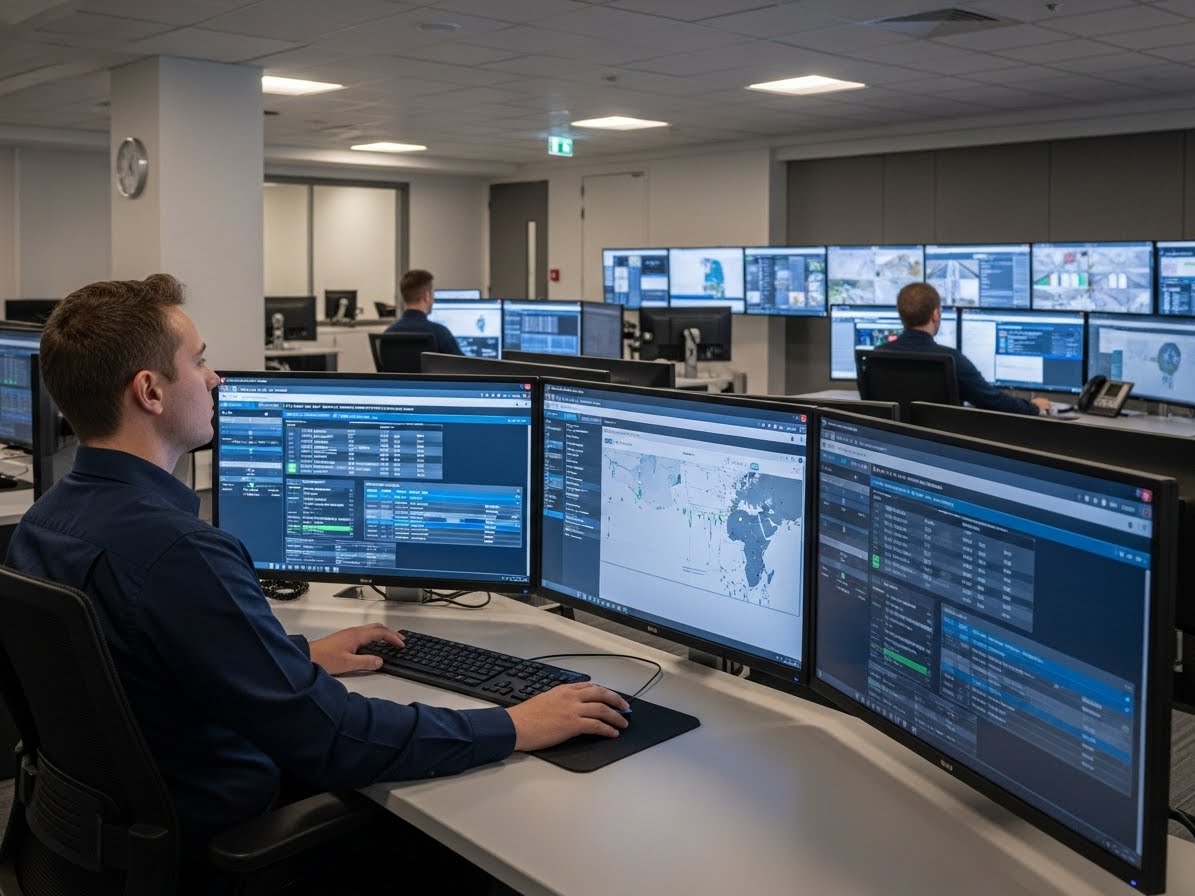
Traditional development approaches treated control rooms as stable, finished environments. Systems were designed, installed, tested, and then expected to operate unchanged for years. Stability was considered a sign of success, and change was viewed as a risk to be avoided.
Operations proved otherwise.
Real-world environments are not static. Risks evolve. Technologies shift. Regulatory requirements change. Organizational structures adapt. Control rooms, positioned at the center of operations, are exposed to every one of these changes. Systems that cannot adapt gradually begin to create friction rather than support.
Modern control room development starts from a different assumption: change is constant. The goal is no longer to preserve a fixed state, but to enable controlled evolution without disruption. Development must support adjustment while protecting operational continuity.
Successful development emphasizes modularity. Components are designed to evolve independently without destabilizing the whole. Integration is prioritized so that systems share context rather than operate in isolation. Scalability allows capacity and capability to grow in step with operational demands.
Just as importantly, development must preserve coherence. As systems evolve, they must remain understandable and trustworthy to the teams that rely on them. Adaptation should feel deliberate, not chaotic.
Development for modern control rooms is not about building something that lasts unchanged. It is about building something that can change without losing reliability, clarity, or trust.