
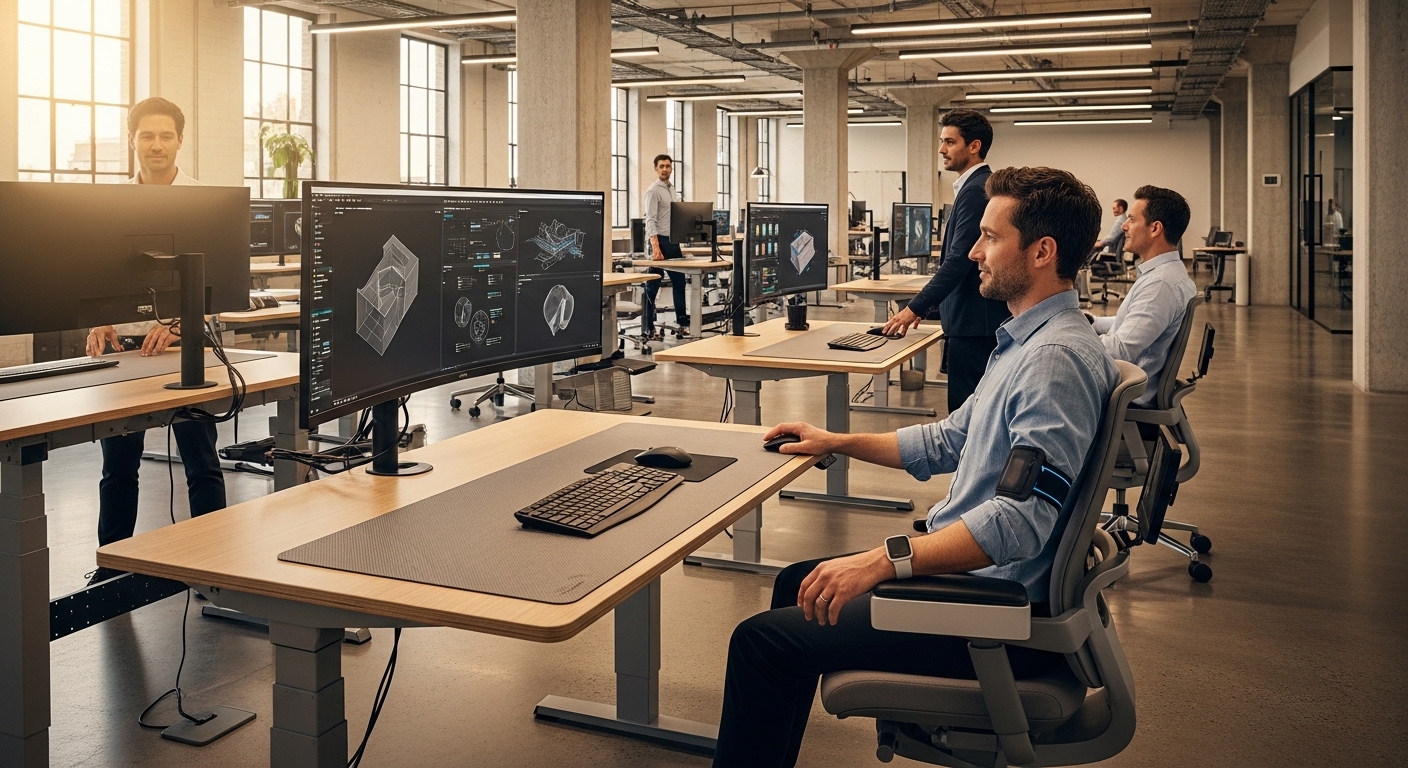
Human-centered ergonomic design applies scientific knowledge of anatomy, biomechanics, and behavioral patterns to the creation of products and work environments. Instead of requiring individuals to adjust to poorly designed tools or spaces, ergonomics ensures that systems adapt to human capabilities and limitations. This philosophy enhances comfort, safety, and long-term performance.
In industrial environments, ergonomic principles significantly reduce repetitive strain injuries and physical fatigue. Workstation height, reach distance, grip texture, and tool weight are carefully calibrated to minimize excessive bending, twisting, or forceful exertion. Streamlined task flow reduces unnecessary motion, improving both efficiency and worker well-being. When physical strain decreases, error rates and downtime often decline as well.
In digital settings, ergonomics extends beyond posture to cognitive design. Interface layouts are structured to reduce mental overload, simplify navigation, and support intuitive interaction. Clear visual hierarchy, logical grouping of information, and predictable workflows allow users to process information efficiently without excessive cognitive effort. This alignment between interface design and human perception improves accuracy and satisfaction.
Movement variability remains essential in all contexts. Even well-designed static positions can lead to discomfort over time. Encouraging micro-breaks, incorporating dynamic seating options, and using adjustable desks promote circulation and reduce muscular fatigue. Flexible environments empower individuals to shift posture naturally throughout the day.
Emerging technologies further enhance ergonomic practice. Smart seating systems with posture feedback, wearable motion sensors, and AI-driven workspace assessments provide measurable insights into behavior and strain patterns. These innovations enable proactive adjustments based on real data rather than assumptions.
Ultimately, human-centered ergonomic design fosters sustainable productivity. By harmonizing environments with human physiology and behavior, organizations create systems that protect health while optimizing efficiency and long-term performance.