
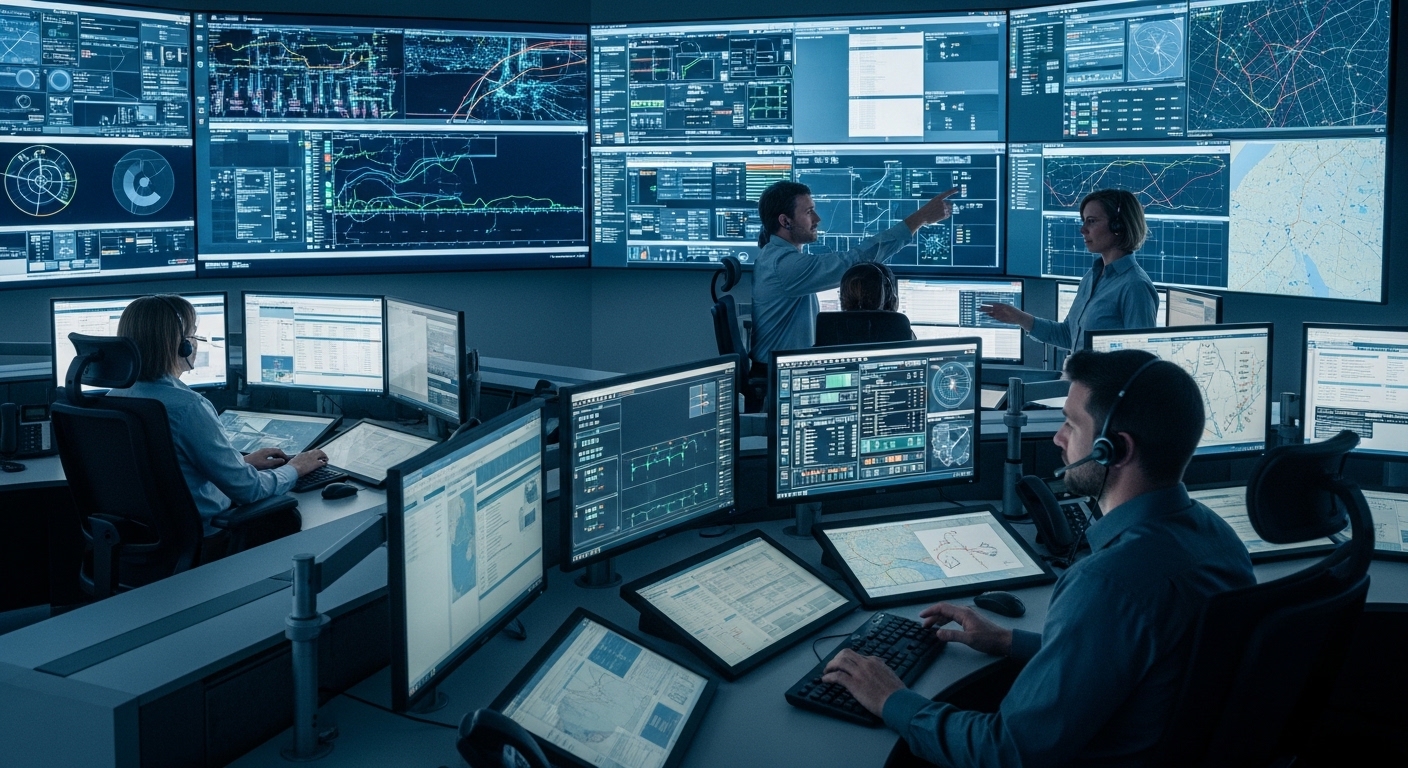
Control rooms serve as the nerve centers of critical operations, where precision, speed, and clarity define success. Whether managing utilities, transportation networks, security systems, or industrial facilities, operators must interpret complex information and act decisively under pressure. Optimizing control room performance requires more than advanced technology—it demands thoughtful process design and human-centered workflows that enable confident decision-making.
Efficiency begins with clarity. Rather than overwhelming operators with excessive data, optimized control rooms prioritize relevant information and present it through intuitive visual hierarchies. Critical alerts, performance indicators, and anomalies must stand out immediately, while secondary data remains accessible but unobtrusive. The objective is not information accumulation, but actionable insight delivered at the right moment.
Advanced interfaces enhance monitoring and alert management by integrating multiple systems into cohesive dashboards. Real-time updates, intelligent filtering, and structured notification systems reduce cognitive load and improve response times. Ergonomic layouts, adjustable displays, and accessible controls further support sustained attention, minimizing fatigue during extended shifts and high-pressure situations.
Seamless integration across infrastructure is essential. Sensors, IoT devices, surveillance systems, and analytics platforms must communicate continuously to create a unified operational picture. Automation plays a complementary role by handling routine processes, escalating critical issues, and maintaining logs for accountability. This balance allows operators to focus on high-value judgment rather than repetitive tasks.
Training and simulation strengthen operational readiness. Scenario-based exercises replicate emergencies and complex system failures, allowing teams to refine coordination, test protocols, and build confidence. When technology, workflow design, and human expertise align, control rooms become proactive environments rather than reactive spaces.
Optimized control rooms enhance situational awareness, reduce errors, and improve response efficiency. By aligning interface design, integration architecture, and operator training, organizations create resilient operational hubs capable of sustaining performance in high-stakes environments.