
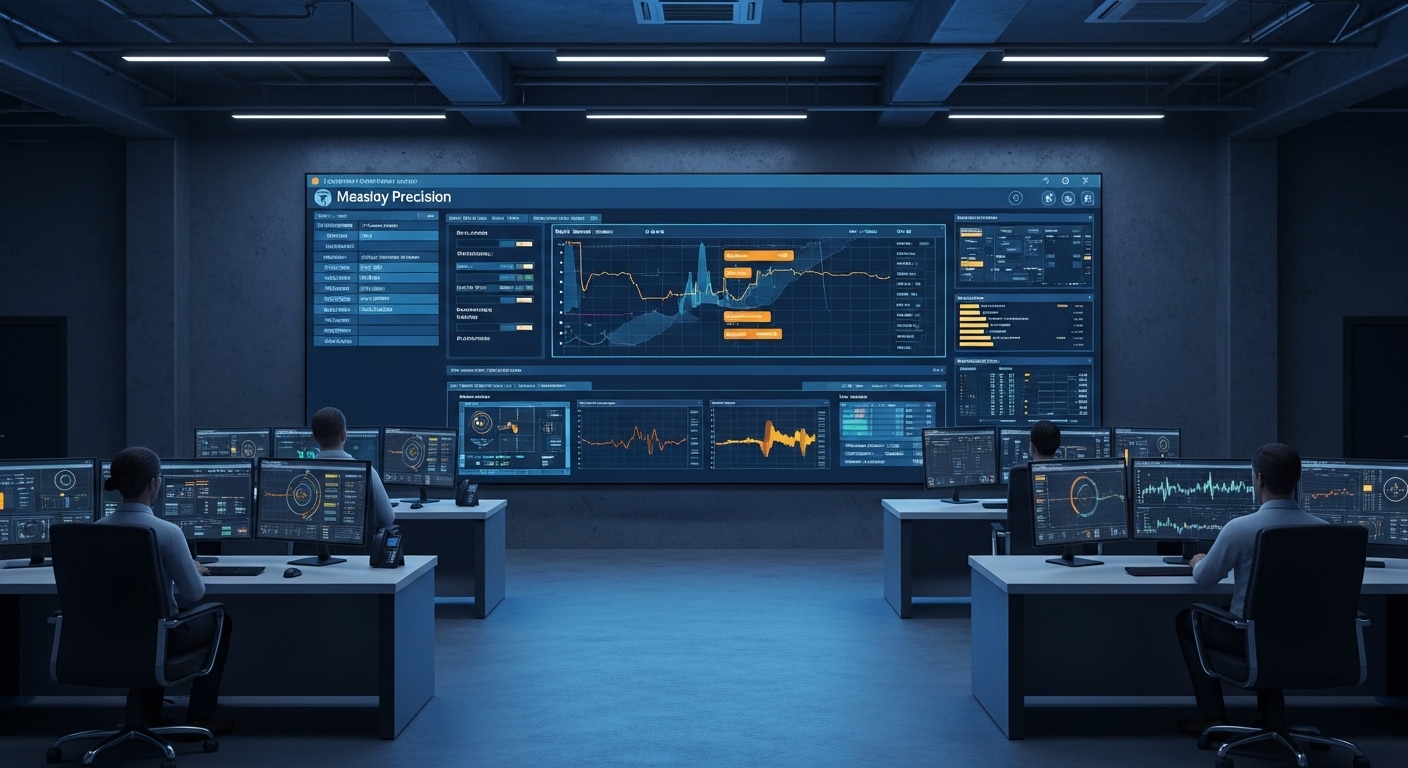
For years, control room applications were engineered as repositories of information. Their strength was measured by how much they could display, how many systems they could connect, and how densely they could populate a screen with operational signals. The assumption was straightforward: visibility equals control. If everything was accessible, then nothing would be missed.
But as operational ecosystems expanded and real-time complexity intensified, that assumption began to fracture. Control rooms evolved into environments where seconds define outcomes and clarity determines risk. In such conditions, abundance without structure becomes distraction. Information without hierarchy becomes noise. And systems designed to show everything often fail to reveal what truly matters.
Operators today are not struggling with data scarcity; they are navigating data saturation. Streams of inputs arrive continuously — performance metrics, alerts, system states, predictive indicators. Without intelligent orchestration, these elements compete for attention rather than support it. The human mind, powerful yet finite, becomes the final integration layer. And under pressure, that layer can overload.
The transformation of modern control room applications begins with a different philosophy. Instead of asking how much can be displayed, designers now ask how little is necessary to ensure confident action. The focus shifts from presentation to perception. From accumulation to prioritization. From complexity to intentional clarity.
Advanced applications now operate as structured environments for thinking. They embed context directly into visual flows. They detect patterns before operators consciously search for them. They distinguish between background stability and emerging deviation. The interface becomes adaptive, subtly reshaping itself according to operational states. Critical changes rise to prominence. Normal conditions recede into quiet stability.
This architectural shift reduces cognitive friction. Operators no longer waste energy navigating between fragmented views or interpreting isolated signals. The application synthesizes relationships, highlights dependencies, and surfaces consequences. It creates a narrative of the system’s behavior rather than a static collection of metrics.
Clarity, in this sense, is not minimalism for aesthetics. It is engineered precision. Every dashboard element exists with purpose. Every alert carries weight. Every visual hierarchy is deliberate. When designed correctly, the system feels composed even in moments of volatility. It provides psychological stability in environments defined by uncertainty.
The most advanced control room applications ultimately achieve something subtle yet powerful: they disappear into performance. They do not dominate attention. They shape it. They enable operators to remain decisive, composed, and strategically aware. In critical environments where hesitation carries cost, this clarity becomes more than a design choice — it becomes infrastructure.
The future of control room technology does not belong to systems that display the most information. It belongs to systems that understand it first, structure it intelligently, and deliver it with precision. In high-stakes operations, clarity is not a feature. It is the architecture that holds everything together.