
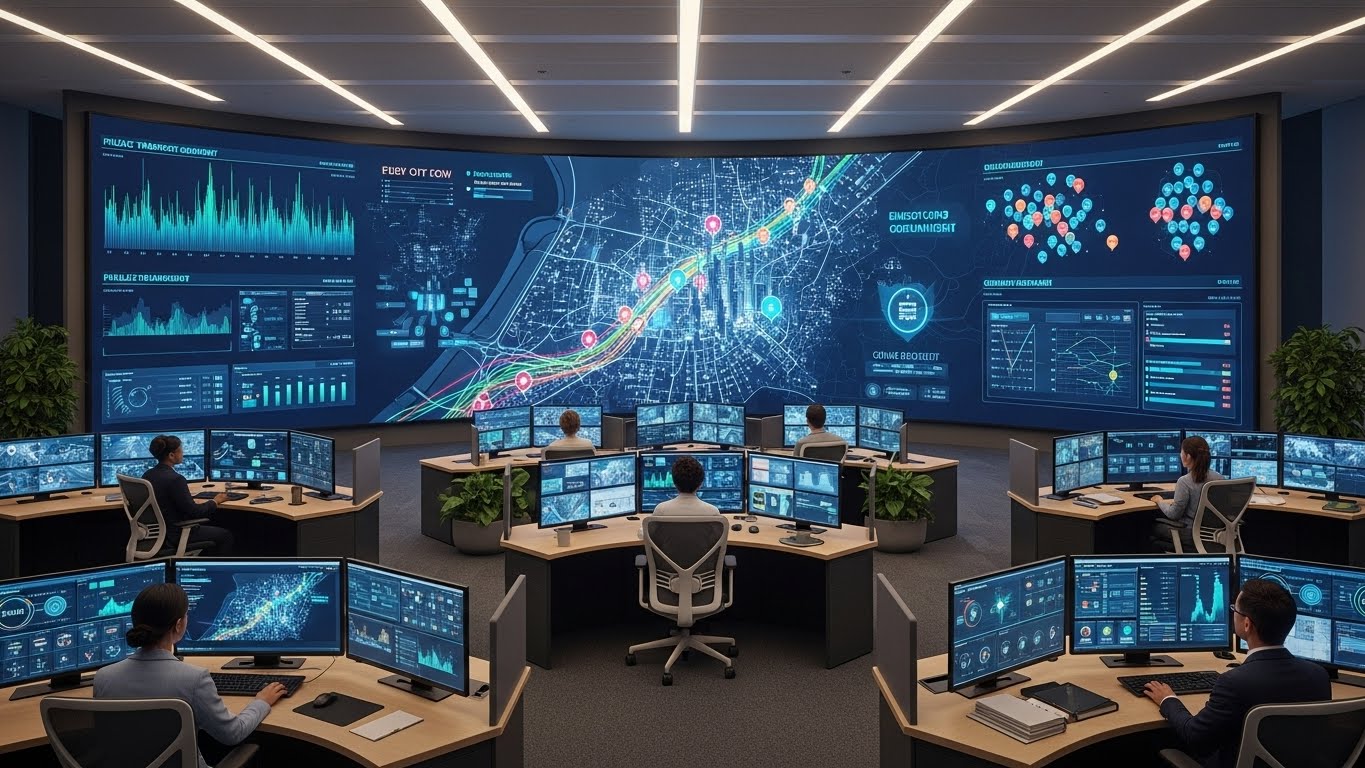
There was a time when control rooms were isolated spaces. They managed power grids, monitored traffic, or oversaw security — each in its own silo. The systems were functional, mechanical, and largely disconnected.
But over the past decade, something subtle yet transformative shifted — not in the technology alone, but in the expectations of the cities themselves. Urban environments stopped seeing control rooms as isolated utilities and began to expect them as integrated ecosystems. They wanted more than monitoring; they wanted orchestration. They wanted control rooms that could connect across domains, anticipate challenges, and empower communities.
This quiet revolution unfolded in the frustration of fragmented infrastructures, in the disappointment of delayed responses, in the erosion of trust when cities failed to act cohesively. Municipalities began losing ground not to competitors with more resources, but to those with more coherent, human-centered systems.
Control rooms in smart cities evolved from isolated utilities into cultural expectations. Citizens began to anticipate responsiveness before they asked for it. They expected integration across traffic, energy, and safety. They demanded consistency whether they interacted with public transport, utilities, or emergency services. Control rooms were no longer judged by their technical capacity, but by their ability to connect and empower communities.
The most successful cities did not simply add more sensors; they rewired their processes around the rhythm of urban life. They stopped asking, “What can we monitor?” and started asking, “What must we enable?” Control rooms became less about observation and more about orchestration. They became the connective tissue between infrastructure and citizens, the translator between systems and communities, the keeper of context.
This transformation was driven not only by technological advances but by cultural shifts. The normalization of instantaneity, the erosion of patience for inefficiency, and the demand for dignity in civic interactions reshaped how people engaged with their cities. A generation raised on smart devices and personalized services began to expect the same fluency from public infrastructure. A fragmented response felt outdated; a seamless, integrated system felt baseline.
The control rooms that thrived in smart cities were not necessarily the ones with the most advanced hardware or the largest budgets. They were the ones that disappeared into the background, enabling seamless, intuitive, almost invisible civic empowerment. They remembered without being told. They anticipated without being programmed. They connected dots the community did not even know existed. And perhaps most importantly, they allowed the human on the other end — the citizen — to feel not managed, but respected.
That is the quiet truth that redefined control rooms in smart cities: they were never about monitoring infrastructure. They were always about empowering communities.