
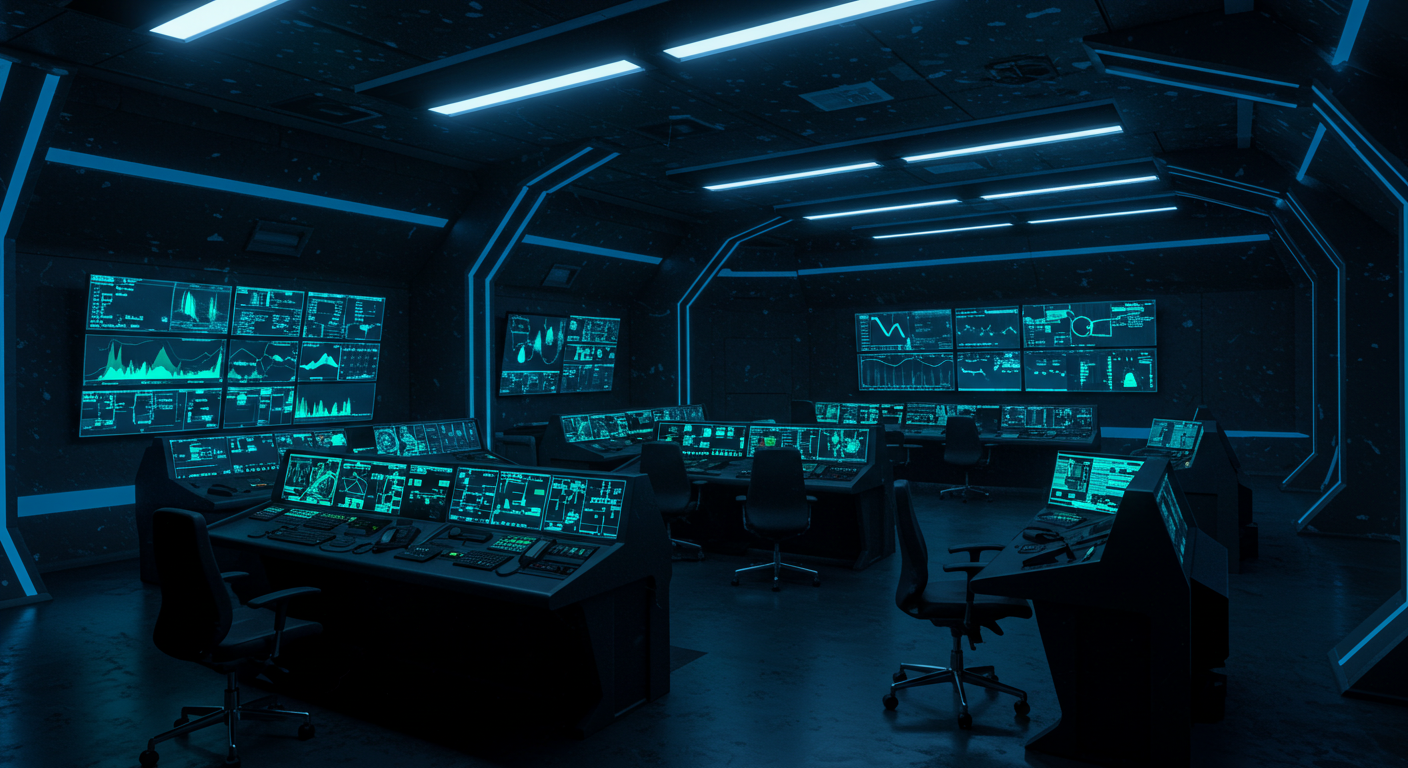
A control room speaks—not in words, but in signals. Its walls convey calm through muted tones. Its lighting communicates focus through precision. Its layout whispers efficiency through intuitive flow. Every element, from the curve of a console to the placement of a power button, forms part of a silent language—one designed not for visitors, but for the operators who live inside it for hours at a time.
This language is not decorative. It is functional, cognitive, and deeply human. When a room is shaped by user-centric design, it stops being a container for technology and becomes an active participant in performance. It reduces the mental effort required to interpret data, minimizes physical strain during extended shifts, and eliminates distractions that fracture attention. In doing so, it allows operators to devote their full cognitive resources to what matters most: making sound decisions under pressure.
The vocabulary of this language is drawn from disciplines that rarely share the same table—ergonomics, human factors engineering, software integration, acoustics, and industrial design. Yet in a well-executed control environment, they speak in unison. A chair is not selected for its appearance but for how it supports spinal alignment over twelve hours. A screen is not mounted for symmetry but for optimal viewing angle and reduced glare. Even the color palette of a dashboard is chosen not for visual flair but for its ability to convey urgency without triggering stress.
This coherence does not emerge by chance. It is the product of integrated project management—where planning, design, and execution are guided by a single, consistent vision. When the same team oversees the entire lifecycle—from initial consultation through final calibration—there is no loss in translation between intent and reality. The insights gathered during the needs assessment directly inform the layout. The ergonomic specifications shape the furniture selection. The software interface is developed in parallel with the physical console, ensuring seamless interaction. This in-house continuity guarantees that every detail serves the same purpose: enhancing operator effectiveness.
And at the heart of that purpose lies a core value: operator well-being. Not as a buzzword, but as a design imperative. Because fatigue is not just discomfort—it is a degradation of judgment. Discomfort is not just annoyance—it is a distraction from critical data. Poor visibility is not just inconvenience—it is a delay in response. Recognizing this, the most effective control environments treat human performance as a system to be supported, not a variable to be managed around.
The result is a space that feels less like a workplace and more like an extension of the operator’s own capabilities. Controls fall naturally under the hand. Data appears in context, not chaos. The ambient environment sustains alertness without stimulation. There is no need to “adjust” to the room—it adjusts to the work. This is not luxury. It is operational necessity.
Of course, this language is rarely noticed by those outside the room. When systems run smoothly, observers credit algorithms or infrastructure. Few consider the silent dialogue between human and environment that made consistent performance possible. But operators know. They feel it in the ease of a long shift, in the clarity of a high-pressure moment, in the quiet confidence that their tools and surroundings are working with them—not against them.
In a world increasingly focused on automation, the control room remains a testament to the irreplaceable role of human judgment. And for that judgment to flourish, the room must speak clearly, calmly, and consistently. It must say, without words: You are supported. You are seen. You can focus.
That is the language of excellence—not shouted, but lived. Not advertised, but experienced. And in the quiet fluency of that language, mission-critical operations find their most reliable foundation.