
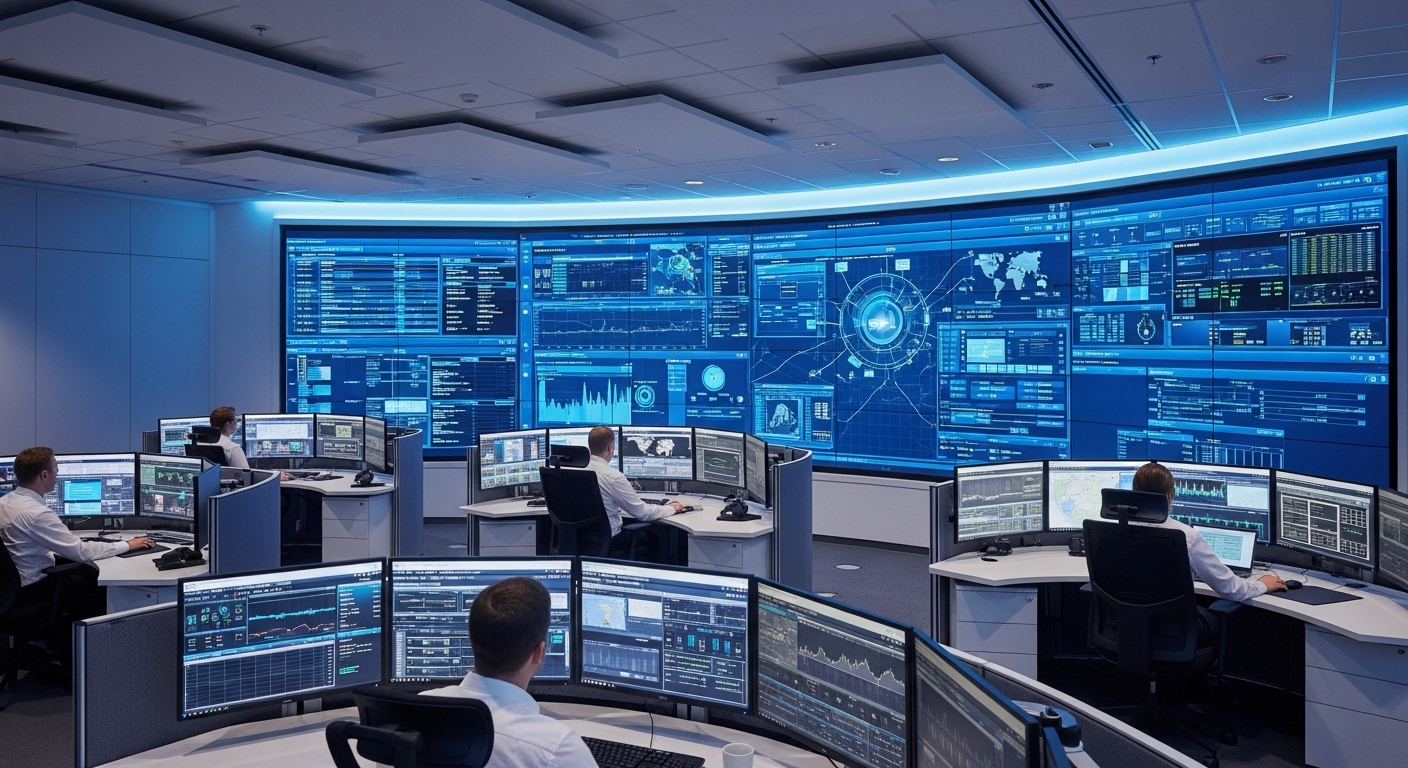
Modern control rooms have evolved into integrated environments where data, systems, and teams operate in seamless coordination. As operational complexity increases, the ability to unify information and processes becomes essential for maintaining efficiency and control.
Integration begins with data consolidation. Information from sensors, networks, and operational systems is gathered into centralized platforms that provide a single source of truth. This eliminates fragmentation and reduces the risk of misinterpretation or delayed response.
Visualization transforms raw data into actionable insight. Advanced dashboards present trends, alerts, and performance indicators in intuitive formats. Operators can quickly assess situations, identify risks, and make informed decisions without navigating multiple systems.
Communication is equally critical. Integrated control rooms enable real-time collaboration between teams, ensuring that information flows quickly and accurately. Whether responding to incidents or managing routine operations, coordinated communication enhances effectiveness.
Scalability supports long-term growth. As organizations expand, control rooms must adapt to increased data volumes and operational demands. Flexible architectures allow new systems to be integrated without disrupting existing workflows.
Resilience is built into integrated environments. Redundant systems, secure networks, and continuous monitoring ensure that operations remain stable even under stress. This reliability is essential in industries where downtime can have significant consequences.
Integrated control environments represent the future of operational management. By aligning technology, processes, and people within a unified system, organizations gain greater visibility, faster response times, and improved overall performance in complex and dynamic environments.